
Language models in GMP document work: what the draft Annex 22 allows
The draft EU guidance keeps generative AI out of critical GMP decisions. Here is where a document pipeline can still help, and the controls we put around it.
We build document pipelines and process automation for teams in life sciences and finance. Each step is specified before it is built, every AI output passes a plain rule before it moves on, and every module is documented for the people who will run it.
| Specified before it is built | The six steps every engagement follows |
|---|---|
| The model proposes, a rule decides | An extractor that is allowed to answer “missing” |
| Still running years later | Seven processes for AutoSync, the same product since 2018 |
| We run what we build | Our own back office, in one system we built |
Regulated teams carry the same weight: documents that must be right, decisions that must be traceable, and systems an inspector or auditor may ask about. We build for that from the first page of the specification.
Answers from controlled documents with the source cited, structured records drawn from free text with a person approving, and data moved between systems with a record of every step.
Automation of the work between systems, with every change checked against the register or system that holds the truth. Our longest engagement is with Norway's largest toll issuer, which sends around 20,000 invoices a day.
Language models break the work into small steps. After each one, a deterministic check passes or stops the record and names what is wrong, so nothing unchecked reaches a person or another system.
Search and answers over SOPs, contracts, manuals and tickets. Every answer links to the passage it came from, and “not in the documents” is an allowed answer.
Robotic process automation in UiPath and n8n for repetitive work between systems, designed on paper first and documented module by module.
Invoices, reports, official documents, reminders and archives joined into one system, where issued records are locked and every figure is typed once. See the one we run ourselves.
Reviews, training and on-call help until your team runs it, with a clear point where you no longer need us.
AutoSync AS, Oslo
AutoSync is Norway's largest AutoPASS issuer: more than 1.4 million customers, 1.9 million vehicles and over 600 million toll passages invoiced a year. Its 36 people send around 20,000 invoices a day, on a margin the regulator sets at 1.75%, so every manual step matters.
We designed, built and documented seven automation processes that keep that data correct, and we still maintain them. In invoice handling, software robots take the simple invoices and people handle the complex ones. The work began in 2018 and carried through a carve-out, an acquisition and two renames.
Our first work there was customer service. The chatbot ran on one vendor's platform (Bold360) and the live agents on a competitor's (Genesys), so we built the handover between them: when a chat moves to a person, the agent sees the whole bot conversation. We also built the first robots that handle customer email. Genesys's published story about this customer service reports that more than half of chat enquiries are solved automatically and that email replies fell from five days to 24 hours.
Your quality team decides what validation a system needs. We make that decision easier by handing over the documents it rests on.
Your process, your data, where the time goes.
Scope, risks and what success is measured by.
The requirements and design you approve before we build.
Built module by module and tested against the specification.
Design decisions, test results and module documentation, handed over.
Training and support until your team runs it alone.
A short, fixed piece of work that ends in a written specification you own, whether or not we build it.
We build what the specification says, for an agreed scope. Changes are written down before they are made.
Optional monthly support, with a date when your team runs it without us.
Short, sourced write-ups for people who have to sign off on AI in regulated work.
The draft EU guidance keeps generative AI out of critical GMP decisions. Here is where a document pipeline can still help, and the controls we put around it.
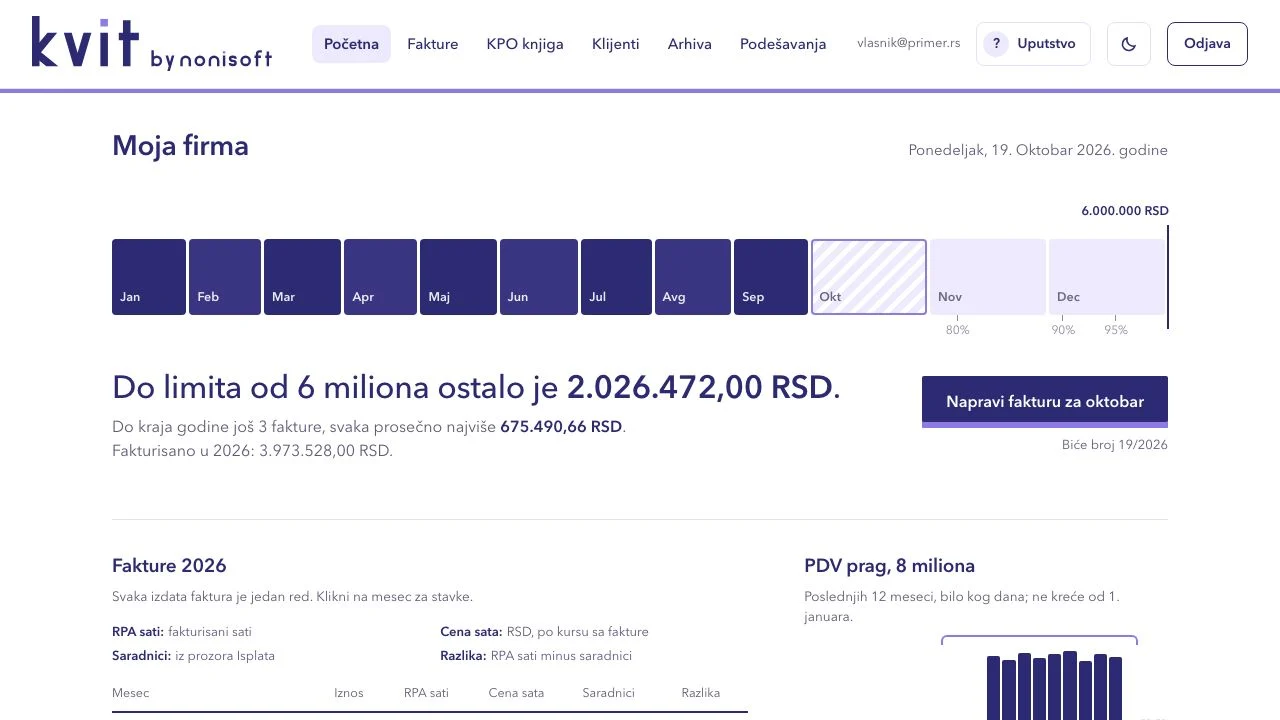
Kvit joins our invoices, client reports, email, tax documents, reminders and a twelve-year archive. Issued records are locked by the database, and seven years of history were imported and checked against the ledger. It is the clearest view of how we glue details together.
Describe the process and where it hurts. An engineer who would work on it replies within one business day with questions, not a sales deck.
Email office@noni-soft.com